A new reading course on networks and distributed systems
This semester, I am teaching Advanced Topics in Networked Distributed Systems: a paper-based course exploring networks, distributed systems, and their intersection with AI.
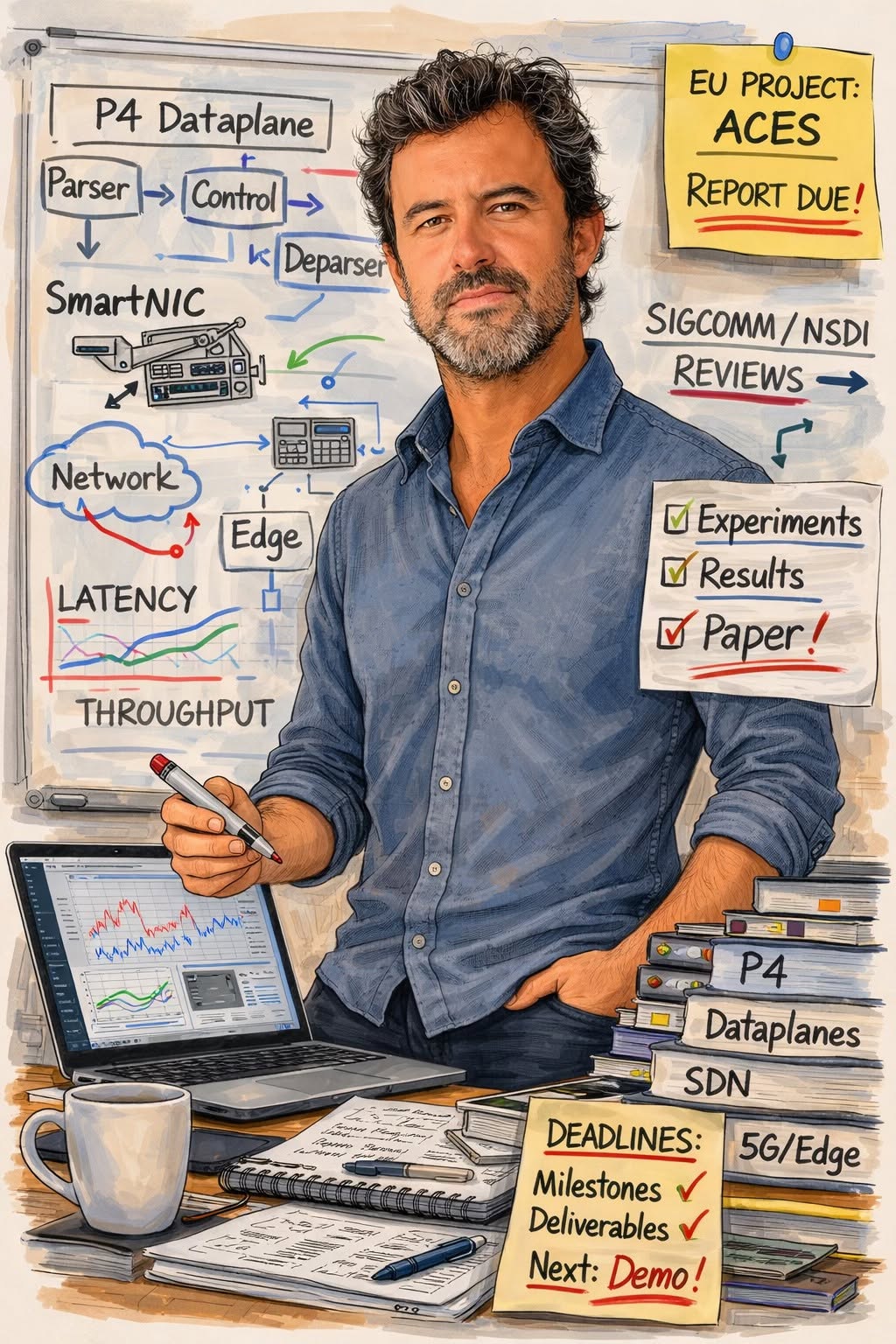
Associate Professor at Instituto Superior Técnico
Senior Researcher at INESC-ID, member of DPSS
I'm a computer scientist interested in how we design, program, and accelerate networks and systems. My research spans Internet architecture, programmable data planes, network security, and the increasingly exciting intersection of AI/ML and networking—in both directions. I enjoy pushing the boundaries of what networks can do, especially when it makes them more flexible, secure, and blazingly fast.
This semester, I am teaching Advanced Topics in Networked Distributed Systems: a paper-based course exploring networks, distributed systems, and their intersection with AI.

I am co-chairing the technical program committee of ACM CoNEXT 2027 with Gyuyeong Kim. The call for papers is available—we look forward to your submissions!

I co-organised Programming SmartNICs: From Packet Processing to Programmable Transport at SIGCOMM 2026, with hands-on sessions on packet processing and programmable transport. Explore the BlueField-3 tutorial and hands-on materials.

I am helping organise EuroP4 2026 as a member of its steering committee. The workshop takes place on 7 December alongside CoNEXT 2026 in Utrecht.
I joined the NSDI 2027 program committee.

Programmable network security and in-network intrusion detection.
Co-advised with Miguel Correia (IST).

Network functions, synthesis, and acceleration.
Co-advised with Luís Pedrosa (IST) and Justine Sherry (CMU).
Synthesizing adaptable network functions.
Co-advised with Luís Pedrosa (IST).
Using programmable networks to detect and recover from failures in GPU clusters, reducing interrupted training jobs and protecting model quality.
Generating network protocol implementations from RFCs using AI, with developer feedback to resolve ambiguities and validate compliance with the standards.
Scaling ML-based traffic detection beyond switch memory limits through sketches, hierarchical flow-state management, and hybrid switch–SmartNIC architectures.
Making split learning more efficient with lightweight client-side speculation, conditional server offloading, and adaptive execution across heterogeneous devices.
Designing adversarial attacks and defenses for AI-driven self-driving networks, with high-performance implementations on CPUs, GPUs, SmartNICs, and programmable switches.
Developing adaptive network deception that responds to attacker behaviour to delay reconnaissance and improve detection. In collaboration with Giorgios Spathoulas (NTNU).

Developing defenses against adversarial traffic that manipulates the monitoring and ML-based control of self-driving networks.
Designing a traffic manager for batch-oriented SmartNICs that groups and schedules packets for state locality and efficient processing. Co-advised with Muhammad Shahbaz (University of Michigan).
Automatically transforming network functions into vectorized packet-processing pipelines, using program analysis to handle control flow and inter-packet dependencies.
Synthesizing accelerated network functions from high-level specifications, targeting batch processing, vectorized pipelines, and the RISC-V-based BURST SmartNIC.

Automatically making stateful network functions easier to parallelize by restructuring shared counters and statistics into efficient per-core operations.
Projeto: NEAT – Network Emulator for Applied Teaching
Development of an Internet-SCION translator, towards a secure Internet
I also coordinate the Master’s Programme in Telecommunications and Informatics Engineering (METI).
For Computer Organization (OC) students: cache simulation to explore cache behavior.

Turning sequential network functions into parallel implementations while preserving their semantics.
Paper & presentation →Exploring how translation can help the Internet evolve towards new architectures.
Read the paper →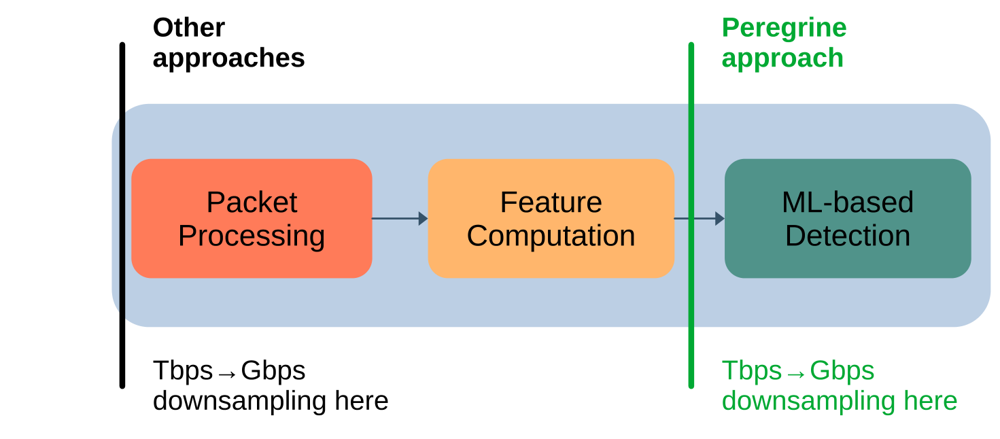
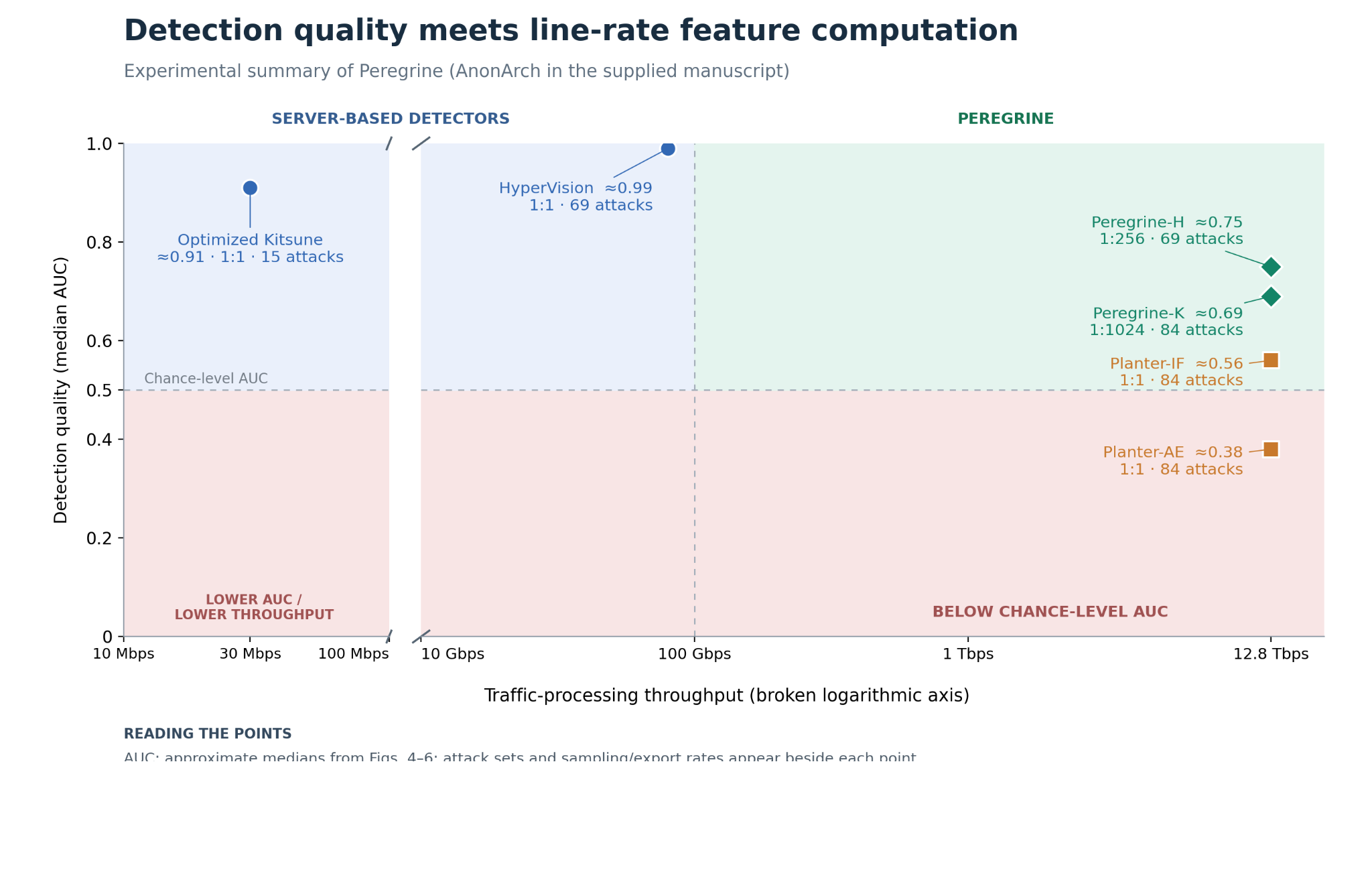
Combining feature computation in programmable switches with machine learning on servers.
Read the paper →Fernando Ramos is an Associate Professor at Instituto Superior Técnico, University of Lisbon, and a senior researcher at INESC-ID. His research interests include software-defined networking, network programmability and acceleration, network security, and machine learning for networks.
He holds a PhD from the University of Cambridge and an MSc from Queen Mary University of London. His previous academic and research experience includes the Faculty of Sciences of the University of Lisbon, the University of Cambridge, Telefónica Research in Barcelona, and Altice Labs.
He coordinates the Master’s Programme in Telecommunications and Informatics Engineering, and served as Scientific Coordinator of the Distributed, Parallel and Secure Systems (DPSS) research area at INESC-ID from 2022 to 2025. He is co-chair of the P4 Education Working Group.